Why IT Band Pain Hits at the Same Running Mile
By the Zetra Coaching Team
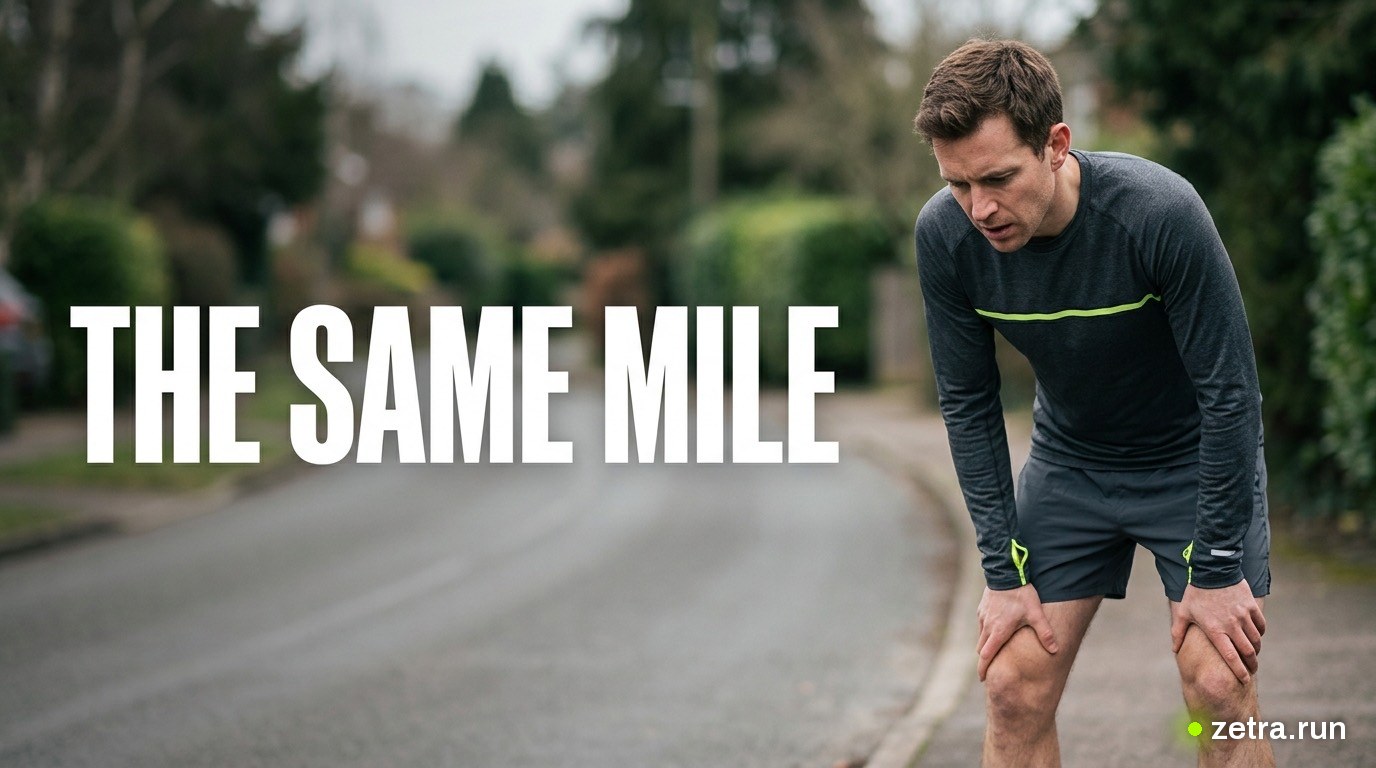
It shows up at the same point in every run, on the outside of the knee, and it does not negotiate.
That burning, sharp outside-knee pain runners call “IT band pain” is generally understood as irritation where the iliotibial band sits against the outer knee under repeated load. But the name describes a pattern of pain, not a confirmed diagnosis. Several problems can feel similar, including other knee, tendon, joint, or nerve issues. If the pain is sharp, repeatable, and changes how you run, treat it as a signal to reduce load and get clear on what is driving it.
The pattern matters. IT band pain often arrives after you have been running for a while, gets worse downhill or on slanted roads, and can force you to stop even though walking feels almost normal a few minutes later. That stop-start confusion is why runners keep testing it.
This article will help you understand what is probably happening, what the old “stretch it and roll it” advice gets wrong, and what sensible load changes usually come before a return to normal running.
What does IT band pain feel like when you run?
IT band pain typically feels like a sharp, hot, or burning pain on the outside of your knee that appears at a predictable point in the run.
You may start fine. Your breathing settles. Your legs feel normal. Then the outside of the knee begins to sting. At first, you think you can run through it. A few minutes later, it feels like someone has turned a screw into the side of the knee.
The strange part is how specific it can be. The pain may appear at the same point in your route, on the same hill, or after the same amount of running. It may calm down quickly when you stop. Walking home might feel fine, which makes you wonder if you overreacted.
Then you run again, and it comes back.
Common patterns runners report include:
- Pain on the outside of the knee, not under the kneecap.
- Pain that builds during the run rather than hurting from the first step.
- Pain that is worse downhill.
- Pain that is worse on cambered roads, where the road slopes toward the gutter.
- Pain on stairs, especially going down.
- A run that starts normally, then suddenly becomes impossible to continue.
That pattern overlaps with other problems, so do not use it as a diagnosis. If your pain is around the front of the knee instead, read the guide to runners knee. If you are unsure, or the pain keeps returning, see a physiotherapist or doctor.
Why does the outside of my knee burn with IT band pain?
The outside of your knee burns because repeated loading can irritate sensitive tissue where the iliotibial band sits near the outer knee.
The iliotibial band, or IT band, is a thick sheet of connective tissue running down the outside of your thigh. It connects into the hip area above and the outer shin below. It helps transmit force through the side of the leg when you stand, walk, and run.
For years, runners were told the IT band “rubs” over the outside of the knee because it is too tight. That model is now widely questioned. The band is not a stretchy rope. It is extremely strong connective tissue. You are not going to meaningfully lengthen it by pulling your ankle behind you for a stretch or grinding the side of your thigh on a foam roller.
A better plain-English model is this: your leg repeats the same loaded pattern again and again. If the load is more than the irritated area can currently tolerate, the outer knee complains. Downhill running can make this worse because your knee spends more time controlling impact as you brake. Cambered roads can also change how force travels through the leg, especially if you always run on the same side of the road.
Late in a run, control can fade. Your hip and glute muscles help keep the thigh tracking well as your foot hits the ground. When that control drops, the knee may see more side-to-side stress. The IT band area does not like being asked to absorb that pattern over and over.
This is why the pain can appear only after you have been running for a while. The first part of the run is within your current capacity. The later part crosses the line.
Is IT band pain just from a tight IT band?
IT band pain is usually not solved by treating the IT band like a tight muscle that needs to be stretched longer.
That does not mean your side thigh never feels tight. It may feel tight because the area is irritated, because nearby muscles are guarding, or because you are poking at it all day to check if it still hurts. But “tight feeling” and “short tissue” are not the same thing.
The old advice was simple: stretch the IT band, foam roll the IT band, keep running. Many runners tried that and felt temporary relief. Then the pain came back at the same point in the next run.
That does not make you broken. It means the main problem may not be tissue length.
Most coaches now focus more on load and control:
- How much running the knee is currently tolerating.
- Whether recent runs added more hills, speed, fatigue, or slanted surfaces.
- Whether the leg is controlled well when you are tired.
- Whether your stride is asking the knee to brake hard every step.
Foam rolling may change how the area feels for a short time. It may help you relax surrounding muscles. But it is unlikely to reshape the IT band itself. If rolling directly over the painful outer knee makes symptoms sharper, that is useful information. Stop doing the thing that irritates it.
Why does IT band pain happen at the same point in every run?
IT band pain often appears at the same point because your knee reaches its current load limit at about the same stage of fatigue.
Early in the run, each step is tolerable. The tissue is not calm, but the load is still under the line. As the run continues, small forces add up. Your stride may change. Your cadence may drop. Your hips may control the leg less well. If you hit a downhill or cambered section at that moment, the pain can arrive fast.
That is why the pattern feels so unfair. You are not necessarily doing anything dramatic at the moment the pain starts. The issue is the total pattern before it.
Here is how to read the pattern without diagnosing yourself:
| When the pain appears | What that pattern suggests | First sensible response |
|---|---|---|
| It starts after the run has been fine for a while | The knee may be tolerating early load, then crossing its limit with repeated steps | Shorten or simplify the run for now, and stop before the pain changes your stride |
| It is worse downhill | Braking load may be irritating the outer knee | Reduce downhill running for a while and choose flatter routes |
| It is worse on slanted roads | Camber may be changing how force travels through the leg | Avoid always running on the same side of the road and pick flatter surfaces where possible |
| It appears late when you are tired | Hip and leg control may be fading under fatigue | Build general runner strength and keep easy runs genuinely easy |
| Walking feels fine after stopping | Running load may be the trigger even if daily movement feels normal | Do not use pain-free walking as proof that running through it is harmless |
The goal is not to find a single villain. It is to reduce the repeated irritation long enough for the system to calm down, then change the pattern that made it return.
Can I run with IT band pain or should I stop?
You should stop a run if the outside-knee pain makes you limp, changes your stride, sharpens as you continue, or keeps coming back predictably.
Some runners try to bargain with IT band pain. They slow down. They stretch at a traffic light. They run on the grass. They tell themselves they will stop if it gets worse.
The problem is that this pain often does get worse once it appears. Running through a sharp signal can teach your body to protect the area harder next time. It can also make you compensate somewhere else.
Self-managing load is different from ignoring pain. Sensible load management means you look for the amount and type of running that does not provoke the pattern, while removing the obvious irritants for now: steep downhills, repeated camber, aggressive speed, and long runs that end with you limping.
Stop trying to prove the knee wrong.
See a physiotherapist or doctor rather than self-managing if you have:
- Pain after a fall, twist, or sudden injury.
- Swelling, locking, giving way, or a knee that feels unstable.
- Pain that wakes you at night or hurts at rest.
- Numbness, tingling, fever, redness, or unusual warmth.
- Pain that keeps returning despite reducing load.
- Pain that forces you to change your stride.
- Any symptom that feels severe, strange, or not like your usual running soreness.
For a wider checklist, read pain red flags.
What actually helps IT band pain calm down?
The first useful step is usually to reduce the specific running load that keeps irritating the outside of the knee.
That sounds less satisfying than a magic stretch. It also works with how this problem usually behaves.
Start with the obvious triggers. If downhill running lights it up, remove downhill running for now. If the same slanted road always brings it on, change the route. If faster running brings it on sooner, keep the pace easier. If the pain appears late, do not keep building the run until it appears. End before the pattern repeats.
This is not a permanent identity change. It is a load change.
Then look at strength. Hip and glute strength does not “fix” the IT band by making it longer. It helps your leg handle force better, especially when you are tired. A runner who loses hip control late in a run may ask the outside of the knee to deal with more stress. Strength training gives you more options.
Good runner strength work usually includes patterns such as:
- Squatting or sitting-to-standing control.
- Step-down control.
- Hip hinging.
- Single-leg balance.
- Side-hip strength.
- Calf strength.
You do not need circus exercises. You need repeatable strength that carries into running. The guide to strength training for runners explains how to make that work without turning every week into a gym project.
Cadence can also help some runners. Cadence is your step rate. A small increase sometimes reduces braking and changes how load lands through the leg. This is not a rule that everyone must run with the same step rate. The old universal cadence target is too blunt. Think of cadence as a small adjustment, not a moral score.
If you try it, the cue is simple: slightly shorter, quicker steps. Do not sprint. Do not bounce. Do not force a dramatic change. You are looking for less braking, not a new personality.
How long does IT band pain take to settle?
IT band pain commonly takes weeks rather than days to settle, and some cases take much longer.
There is no honest promise here. The timeline depends on how irritated the area is, how long you have been provoking it, what your normal training looks like, and whether the underlying load pattern changes.
A common mistake is stopping until the pain disappears in daily life, then returning to the exact same route, hill, pace, and distance that caused it. The first run back feels fine. The next one feels fine. Then the old point in the run arrives, and the outside knee burns again.
That does not mean rest failed. It means rest reduced symptoms, but the same load pattern may still be waiting.
Progress usually looks boring. You find running that does not trigger the pain. You avoid the surfaces and efforts that do. You build strength. You reintroduce load carefully. You stop letting the pain be the thing that ends the run.
If it keeps recurring, get help. A good physiotherapist can watch how you move, test strength and range, and help you separate IT band-type pain from other causes that feel similar.
Frequently asked questions
What does IT band pain feel like?
IT band pain usually feels like sharp, hot, or burning pain on the outside of the knee. It often starts after the run has been fine for a while, then builds quickly until you have to stop. It may feel worse downhill or on stairs. Because other knee problems can feel similar, use the pattern as a clue, not a diagnosis.
Can I run with IT band pain?
Do not keep running if the pain makes you limp, changes your stride, sharpens as you continue, or appears predictably every time you run. Some runners can stay active by reducing the specific load that triggers symptoms, but persistent or recurring pain should be checked by a physiotherapist or doctor.
Does foam rolling the IT band work?
Foam rolling the IT band is unlikely to lengthen the band in any meaningful way. The IT band is very strong connective tissue, not a soft muscle you can stretch longer with a roller. Rolling nearby muscles may change how the area feels for a short time, but mashing the painful outer knee is not a load solution.
How long does IT band syndrome take to settle?
It commonly takes weeks rather than days, and some cases take much longer. The pain may calm down with rest, then return if you go back to the same hills, cambered roads, pace, or run length that irritated it. If symptoms persist, recur, or change how you move, see a professional.
What causes IT band pain in runners?
IT band pain in runners is commonly linked to repeated load at the outer knee, especially when training, terrain, fatigue, or leg control exceed what the area can currently tolerate. Downhill running, slanted roads, sudden training changes, and weak or tired hip control can all contribute. The exact cause varies, which is why recurring pain deserves a proper assessment.
The win is not finding the perfect stretch. The win is noticing the pattern early enough to stop feeding it. Reduce the load, remove the obvious triggers, build the strength to control your leg late in a run, and get help if the pain keeps returning. Zetra can coach your runs live from Apple Watch and iPhone, reacting to pace, heart rate, and cadence in real time so you are not guessing when your body is already sending a clear signal.
Run with a coach in your ear.
Zetra guides you live — heart rate, pace and cadence — on every run.