Do Runners Need Electrolytes? When Sodium Matters
By the Zetra Coaching Team
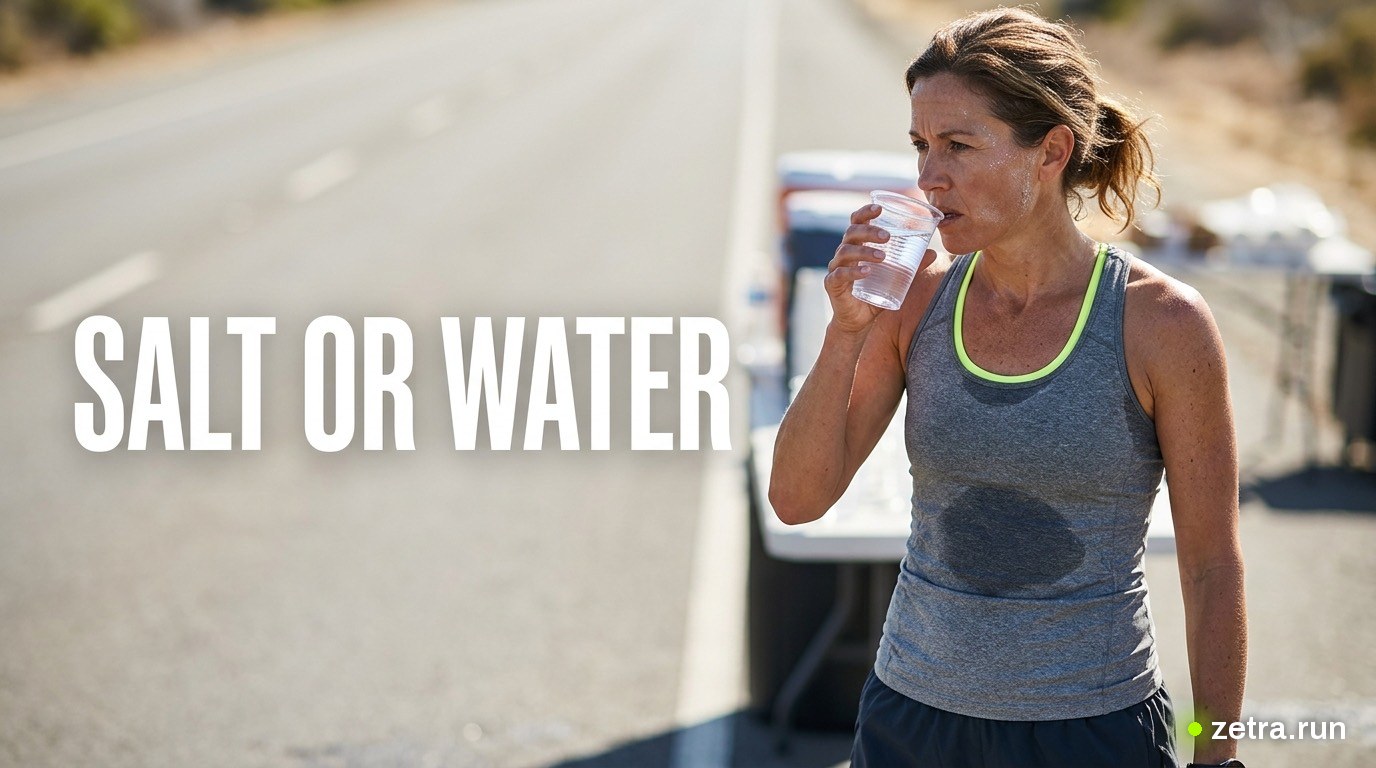
The runner most at risk on a hot marathon day is not always the one who drank too little.
Do runners need electrolytes? Sometimes. For most runs of an hour or less, ordinary meals cover what you lose, and you do not need a special tablet, powder, or sports drink. Where electrolytes start to matter is long duration, heavy sweating, hot weather, and runners who come home with white salt marks on their face or kit.
The electrolyte that matters most for runners is sodium. You lose it in sweat. Some runners lose a little. Some lose a lot. That difference is why one runner can finish fine on water and food, while another needs a sodium plan for the same race.
There is also a real overdrinking risk. Drinking large volumes of plain water during a long effort can dilute the sodium in your blood. That condition is called hyponatremia. It is uncommon, but dangerous. The old advice to “drink as much as possible” was abandoned for a reason.
Do runners need electrolytes for every run?
You do not need electrolytes for every run. If you are running for an hour or less, eating normal food before and after usually gives you enough sodium.
That does not mean electrolyte products are useless. It means they are situational.
Your body is not losing “energy” when you see sweat. Sweat is mostly water, but it also carries sodium and other minerals. Sodium matters because it helps your body hold fluid in the right places and keeps nerve and muscle signals working normally. For running, it is the electrolyte worth paying attention to first.
Most electrolyte marketing makes the category sound more complex than it needs to be. You see long ingredient lists: magnesium, potassium, calcium, trace minerals, amino acids, caffeine, vitamins. Some of those can have a place in a runner’s diet. But during the run, sodium is usually the main one in meaningful sweat loss.
The question is not “Are electrolytes good?”
The better question is: “Am I doing the kind of run where sodium loss is likely to matter?”
If the answer is no, save your money. Drink to thirst. Eat your regular meals. Move on.
If the answer is yes, build a simple sodium plan and practise it before race day.
When does sodium start to matter for runners?
Sodium starts to matter when the run is long enough, hot enough, or sweaty enough that water alone stops matching what your body is losing.
You do not need to turn every easy run into a nutrition experiment. But you should pay attention when several of these are true:
- You are running long.
- The weather is hot or humid.
- You sweat heavily even at an easy effort.
- Your clothes, hat, or face dry with white salt marks.
- You often feel wiped out after hot runs even when your pacing was sensible.
- You are training for a marathon or another long race.
- You plan to drink regularly for a long time.
Sodium loss varies enormously between runners. Two people can run the same route, in the same weather, at the same effort, and finish with very different salt losses. One has barely damp sleeves. The other looks like someone dusted their face with flour.
That is why generic rules are weak here.
Start with the run in front of you. Then adjust from experience.
| Run type and conditions | Is sodium worth adding? | What to watch for |
|---|---|---|
| Easy run of an hour or less in mild weather | Usually no | Thirst, normal recovery, whether you feel fine with ordinary meals |
| Easy run of an hour or less in hot weather | Sometimes | Heavy sweating, salty skin, dizziness that does not feel like normal effort, poor recovery |
| Long run in mild weather | Often worth considering | How much you drink, whether your stomach tolerates sodium, how you feel late in the run |
| Long run in hot or humid weather | Usually worth planning | Sweat rate, salt marks, rising effort, whether you are drinking far beyond thirst |
| Marathon day or another long race | Yes, plan and practise | Sodium intake, fluid intake, aid station habits, signs of overdrinking |
| You finish covered in white salt marks | Often yes | Repeated pattern across runs, especially in heat or long efforts |
| You feel worse the more water you drink | Stop guessing and get help if symptoms are serious | Headache with nausea, confusion, swelling in hands or face |
Electrolytes are not a shield against bad pacing, poor heat adjustment, or underfueling. If you run too hard on a hot day, sodium will not save the run. If you forget carbohydrates in a marathon, salt tablets will not replace fuel. For the bigger picture, read marathon fueling and running in the heat.
What is hyponatremia in runners?
Hyponatremia means the sodium level in your blood has become too low. In runners, the classic risk is drinking a lot of plain water during a long effort, faster than your body can safely handle.
This is not the same as being “low on electrolytes” in the casual sense. It is a medical problem.
Your blood needs a workable balance of water and sodium. If you keep adding plain water while losing sodium through sweat, that balance can shift in the wrong direction. The sodium in the blood becomes diluted. Your cells can start to take on too much water. That is why hyponatremia can become dangerous.
The confusing part is that some symptoms can look like dehydration at first. You may feel bad. You may have a headache. You may feel sick. The wrong instinct is to keep drinking more water.
If the problem is hyponatremia, more plain water can make it worse.
Warning signs to take seriously include:
- Headache with nausea
- Confusion or unusual behavior
- Puffiness or swelling in your hands or face
- Feeling worse the more you drink
- Vomiting during or after a long effort
- Severe weakness that does not match the pace
These signs need immediate medical help. Do not try to fix serious symptoms with more water. Do not tell yourself you are just being tough. Get help.
This is not meant to scare you away from drinking. It is meant to put the risk in the right place. Dehydration can hurt performance and can become serious. Overdrinking can also be dangerous. The middle ground is not complicated: drink to thirst, respect heat, and use sodium when the run calls for it.
For a deeper practical guide, read how much to drink running.
Can you drink too much water while running?
Yes. You can drink too much water while running, especially during long races or long hot efforts when you drink at every chance because you are afraid of dehydration.
The body is not a storage tank you need to keep topped off. It is a moving system. You are sweating, breathing hard, using fuel, shifting blood flow, and trying to cool yourself. More water is not always better.
The old message was simple: drink early, drink often, stay ahead of thirst. That advice sounded safe, but it pushed some runners toward overdrinking. Most coaches now give a more measured message: drink to thirst, plan for conditions, and practise before race day.
Thirst is not perfect, but it is useful. It keeps most runners out of trouble better than forced drinking does.
That does not mean you should ignore fluid until you are desperate. On a hot long run, waiting until your mouth feels like paper is not a great plan. But there is a difference between staying responsive and pouring in water just because the cup is there.
A good check during long efforts is simple:
- Are you drinking because you are thirsty?
- Are you drinking because the plan says so, even though your stomach is sloshing?
- Are your hands getting puffy?
- Is your face swelling?
- Are you feeling worse after more plain water?
Those last signs change the situation. Stop treating it like normal thirst. Serious symptoms need medical help.
Sodium can reduce hyponatremia risk in the right context, but it is not a license to overdrink. You can still create problems if you force down too much fluid. Sodium helps the plan. It does not make your body ignore basic limits.
Are electrolyte tablets necessary or just marketing?
Electrolyte tablets are useful when they solve a real sodium problem. They are marketing when they are sold as something every runner needs for every run.
Be skeptical of big promises. Electrolytes do not make an easy run more “optimized.” They do not replace training. They do not turn a hot run into a cool one. They do not fix poor pacing, poor sleep, or a skipped breakfast.
What they can do is much simpler: add sodium to the fluid you are already drinking.
That can help on long, sweaty runs. It can help runners who repeatedly finish crusted with salt. It can help on hot marathon days when you are taking fluid over a long time. It can also be easier on the stomach than trying something new from an aid station.
But you need to test it.
Do not discover your sodium plan during a race. Practise during training runs that look like race conditions. Use the same drink, tablet, or food you plan to use later. Notice your stomach, thirst, hands, face, and how you feel late in the run.
Also read labels plainly. Some drinks are mostly sugar. Some tablets are mostly flavor. Some products contain caffeine. Some have very little sodium. That does not make them bad. It means you should know what problem you are buying them to solve.
If your run is short, mild, and easy, you probably do not need the product.
If your run is long, hot, and sweaty, sodium is worth planning.
That is the honest middle.
How should you plan sodium without overcomplicating it?
Plan sodium by matching it to duration, sweat, heat, and your own history. Keep the system boring enough that you can actually use it.
Start here:
- For most runs of an hour or less, use normal food and drink to thirst.
- For long runs, especially in heat, consider sodium with your fluids.
- If you are a heavy sweater or finish with salt marks, take that pattern seriously.
- Practise the same setup in training before you race with it.
- Avoid forcing plain water beyond thirst.
- Treat warning signs as medical, not motivational.
You do not need a perfect formula to make better choices. In real running, a simple tested plan beats a complicated plan you only understand on paper.
Pay attention to the difference between thirst and fear. Thirst says, “Drink.” Fear says, “Drink at every aid station because something bad might happen.” That fear can push you into the overdrinking zone.
You also need to separate sodium from fueling. If you are running long, you may need carbohydrates for energy and sodium for fluid balance. Those are related during a race, but they are not the same job. A salty drink with no meaningful fuel may not cover your energy needs. A gel with no sodium may not cover your sweat losses. Look at the whole plan.
The goal is not to finish with no thirst, no sweat, and no discomfort. Running long is still running long.
The goal is to avoid obvious mistakes: no forced plain-water overload, no brand-new tablets on race day, no ignoring serious symptoms, no buying products for runs that do not need them.
Frequently asked questions
Do I need electrolytes for running?
For most runs of an hour or less, you usually do not need electrolytes. Normal food gives you sodium, and you can drink to thirst. Electrolytes become more useful for long runs, hot or humid conditions, heavy sweating, and races where you drink over a long time.
What is hyponatremia in runners?
Hyponatremia is low sodium in the blood. In runners, it can happen when you drink large amounts of plain water during a long effort and dilute the sodium in your blood. It is uncommon, but dangerous. Headache with nausea, confusion, swelling in the hands or face, or feeling worse the more you drink needs immediate medical help.
Can you drink too much water while running?
Yes. Drinking too much plain water during long efforts can be dangerous because it may dilute blood sodium. More water is not always safer. Drink to thirst, be careful with forced drinking, and get medical help if you have serious symptoms such as confusion, swelling, or headache with nausea.
Do I need salt tablets for a marathon?
You may need salt tablets for a marathon if you sweat heavily, run in hot or humid conditions, finish training runs with white salt marks, or know that sodium helps you tolerate fluids. You should practise with them in training first. Do not try salt tablets for the first time on race day.
Why do I have white salt marks on my face after running?
White marks on your face, hat, or clothes are dried salt from sweat. It commonly means you are losing a noticeable amount of sodium, especially if it happens often. It does not automatically mean you need tablets on every run, but it is a sign to consider sodium for long, hot, or heavy-sweat efforts.
Electrolytes are not magic. They are a tool. Use them when the run is long, hot, or salty enough to justify them, and stop treating plain water as automatically harmless. Zetra can help you respond during the run by reacting to your heart rate, pace, and cadence in real time, so your plan stays connected to what your body is actually doing.
Run with a coach in your ear.
Zetra guides you live — heart rate, pace and cadence — on every run.