How Many Gels for a Marathon? The Carb Math That Works
By the Zetra Coaching Team
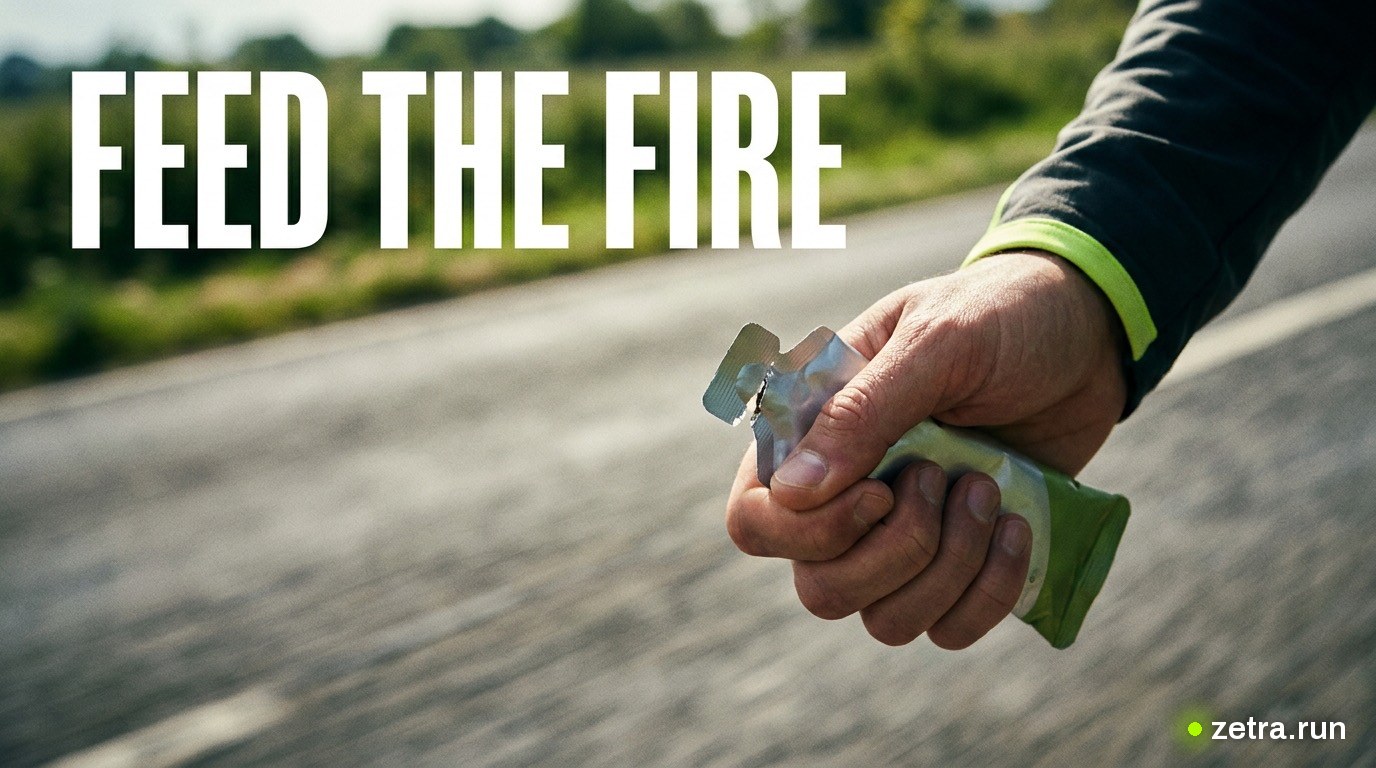
Your fueling plan matters long before you feel hungry. By the time you notice, the mistake is already moving through you.
For a marathon, the useful starting point is 30-60 g of carbohydrate per hour. That is the standard sports-nutrition range for efforts over about two hours. If your gut is trained and your fuel uses mixed carbohydrate sources, commonly glucose and fructose, you may be able to handle up to about 90 g/hour. But tolerance varies widely. More is not better if it sends your stomach sideways.
If you are Googling “how many gels for a marathon,” do not start with the number of gels. Start with grams of carbohydrate per hour. A typical gel contains roughly 20-30 g of carbohydrate, so the label tells you how that product fits your hourly target. Gels, chews, and drink mix can all work. The body cares about the carbohydrate total, the timing, and whether your gut has practiced it.
How many grams of carbs per hour do you need for a marathon?
Most marathoners should plan around 30-60 g of carbohydrate per hour, then adjust based on gut tolerance, race duration, and how hard they are running.
That range is not a magic rule. It is long-standing sports-nutrition guidance for endurance efforts over about two hours. It gives you enough carbohydrate to help protect the fuel you already have stored, without assuming your stomach can handle the highest possible intake.
Your muscles store carbohydrate as glycogen. During a marathon, you burn through that stored fuel while also taking in carbohydrate from gels, chews, sports drink, or other race fuel. If the outside supply is too low for the effort, the gap gets wider. That is one reason runners hit the wall: the legs still move, but the system can no longer support the pace you were asking for.
The high end, up to about 90 g/hour, is for runners who have trained their gut and are using mixed carbohydrate sources. That usually means the product is designed to use more than one transport route in the gut, commonly glucose plus fructose. Even then, it is not automatic. Some runners handle it well. Some do not. A runner with diabetes or a gut condition should talk to a qualified professional before building an aggressive fueling plan.
Here is the practical version:
| Race duration | Target carbohydrate per hour | Roughly what that looks like in practice |
|---|---|---|
| Efforts over about two hours | 30-60 g/hour | A steady schedule using gels, chews, drink mix, or a combination |
| Marathon when you are fueling for the first time | 30-60 g/hour | Start in the middle or lower end if your gut is untested, then practice in long runs |
| Marathon with a trained gut and mixed carbohydrate sources | Up to about 90 g/hour | Higher-carb plan using products your stomach has already handled at race effort |
Do not copy another runner’s exact plan unless your gut, pace, products, and race conditions are similar. Your plan needs to survive your body, not someone else’s spreadsheet.
How many gels do you need for a marathon?
You need enough gels to hit your carbohydrate target per hour, based on the grams listed on the label and your expected time on course.
That is the clean way to calculate it:
- Pick your target: 30-60 g carbohydrate per hour is the standard starting range.
- Check your gel label: a typical gel contains roughly 20-30 g.
- Work by time, not distance.
- Include carbohydrate from drink mix or chews if you are using them.
- Bring what your plan requires, plus enough margin that you are not forced to skip fuel if a packet drops or a station is crowded.
The mistake is counting packets without reading labels. One brand’s gel may sit at the lower end of the typical range. Another may sit at the higher end. Some chews split the carbohydrate across several pieces. Some drink mixes provide a meaningful part of your hourly total. If you add them all together without checking, you can underfuel or overload your stomach without realizing it.
Think of each product as a carbohydrate unit. The packet shape does not matter. The grams do.
A simple plan might use gels only. Another might use gels plus sports drink at aid stations. Another might use chews early because they feel easier to handle, then gels later when chewing feels annoying. All are valid if the carbohydrate per hour is right and you have practiced the exact setup.
Do not build the plan on race morning. Do it while you are still training, ideally during the long runs where you are already testing pace, shoes, kit, and what you eat before running. Your pre-run meal matters too, so if that part is still fuzzy, read what to eat before running.
When should you take your first gel?
Take your first fuel within the first 30-45 minutes, not when you feel hungry or empty.
That feels early. Good. It is supposed to.
Hunger is a late signal in a marathon. So is the sudden sense that your legs are not listening. By the time you feel the mistake, your body has already been working with less incoming carbohydrate than you planned. You cannot instantly fix that by swallowing a gel. The gel still has to move through your gut, get absorbed, and become useful.
Fueling works best as a schedule. You take carbohydrate because the clock says it is time, not because your mood has changed.
This is where first-time marathon fueling often goes wrong. You feel good early. The pace is under control. The crowd is loud. Your breathing feels easier than expected. So you delay the first gel.
Then you delay the next one.
Later, you try to catch up. Now your stomach is dealing with a bigger hit of carbohydrate while your body is already under more stress. That is when gels start to feel thick, sweet, and wrong.
Start early. Stay boring. Let the plan do its job before the marathon gets loud.
Should you fuel by distance or by time?
Fuel by time, not distance, because carbohydrate use is tied to how long you are running and how hard your body is working.
Distance can fool you. The same point on the course arrives at different times for different runners. Weather, hills, crowding, and pacing all change how long your body has been burning fuel. A gel “every so many miles” might work for one runner and miss the target for another.
Time is cleaner.
Set a repeating schedule based on your hourly carbohydrate goal. Then rehearse it in training until it feels normal. Your watch can help, but the key is not the alert itself. The key is deciding ahead of time that you do not negotiate with the alert.
If the plan says fuel, you fuel.
There are exceptions. If your stomach is clearly turning, forcing more gel may make the race worse. Slow down, sip fluid, and give your gut a chance to settle. But do not use mild reluctance as a reason to skip. Late in a marathon, almost nothing sounds delicious. The goal is not appetite. The goal is supply.
Are gels, chews, and drink mix the same?
Gels, chews, and drink mix are interchangeable if they give you the carbohydrate total you need and your gut tolerates them.
That is the useful truth most product marketing hides. Your body does not care whether the carbohydrate arrived in a shiny packet, a bottle, or a chew. It cares what kind of carbohydrate it is, how much arrives per hour, how concentrated it is in your stomach, and whether fluid is available to help it move through.
Each form has tradeoffs.
Gels are compact. They are easy to count and easy to carry. But they can feel thick, especially later in the race.
Chews may feel gentler because you can spread them out. But chewing while running hard can get annoying, and it is easy to lose track of how much you have actually taken.
Drink mix can be smooth because fuel and fluid arrive together. But if you rely only on on-course drink, you need to know what is being served and whether you can drink enough without upsetting your stomach.
You can mix forms. Many marathoners do. Just do the math from the labels. If your drink mix supplies part of your hourly carbohydrate, your gel schedule should reflect that. If your sports drink is mostly for fluid and contains little carbohydrate, do not pretend it is doing the same job as a gel.
The plan is not “take gels.” The plan is “deliver carbohydrate steadily.”
How should you drink water with gels?
Most gels work better when you take them with fluid, especially if the gel is concentrated.
Fluid helps dilute the carbohydrate in your stomach and can make the gel easier to tolerate. That does not mean you need to chug. It means you should think about where the drink stations are before race day, so your gel timing and fluid timing do not fight each other.
A common mistake is taking a gel far away from available fluid, then running with a sticky, heavy feeling in the stomach. Another mistake is swallowing several gels close together and trying to wash them down all at once. Your gut likes steady work more than surprise dumps.
If the course has drink stations, study where they are. If you carry your own bottle, decide how it fits the gel schedule. If you use drink mix, remember it counts toward your carbohydrate total. Do not add gels on top as if the bottle were only water.
Hot conditions can make this harder because your fluid needs may rise while your stomach feels less cooperative. Do not turn that into a heroic experiment. Practice in training. Adjust calmly. If your stomach tends to revolt, aim lower within the standard range and pace in a way your fueling can support.
How do you train your gut for marathon fuel?
You train your gut by practicing your race fueling during long runs, using the same products, timing, and effort you plan to use on race day.
Gut tolerance is trainable. Not perfectly. Not for everyone to the same ceiling. But most runners can improve what they handle by practicing.
Start with the lower end if you are new to fueling. Use a schedule. Pay attention to what happens next: sloshing, nausea, cramps, urgent bathroom needs, burping, or a sudden dislike of sweetness. Those are data, not character flaws.
Then adjust one thing at a time.
Change the product. Change the form. Change the timing. Add more fluid. Try a lower hourly target. Test mixed carbohydrate products if you are aiming higher. Do not change everything at once, because then you will not know what fixed the problem or what caused it.
The long run is not only for legs. It is a rehearsal for your stomach, your hands, your pockets, and your decision-making when you are tired.
This also connects with carb loading. Carb loading helps you start with fuller glycogen stores. Race fueling helps you keep adding carbohydrate while you run. They are related, but they are not the same job. A good carb load does not remove the need to fuel. A good fueling plan does not fix a chaotic race-week diet.
What if your stomach cannot handle the high end?
If your stomach cannot handle higher carbohydrate intake, aim lower within the standard range and pace accordingly.
That is not failure. It is good coaching.
A fueling plan has to match the body you have on race day. If you force up to about 90 g/hour because you read that trained runners can tolerate it, but you have not practiced it, you may create the exact problem you were trying to avoid. Stomach problems are common in marathons. They are also race-changing.
The honest tradeoff is this: if you take in less carbohydrate, you may need to run more conservatively. Your pacing, carb loading, breakfast, and in-race fuel all work together. If one piece is limited, the others matter more.
Use training to find the highest intake that feels boring. Boring is the goal. No drama. No gut panic. No sudden need to bargain with your stomach at the hardest part of the race.
If you have diabetes, a diagnosed gut condition, or repeated severe stomach symptoms, talk to a qualified professional. General marathon fueling advice is not medical care.
Frequently asked questions
How many gels do I need for a marathon?
Work from grams per hour, not a fixed gel count. Most marathoners should start with 30-60 g of carbohydrate per hour. Check your gel label, since a typical gel contains roughly 20-30 g, then build a schedule based on your expected time on course and any carbohydrate you also get from chews or drink mix.
When should I take my first gel?
Take your first gel or other carbohydrate source within the first 30-45 minutes. Do not wait until you feel hungry, weak, or empty. Fueling works best when it starts early and stays on schedule.
How many grams of carbs per hour when running?
For efforts over about two hours, standard sports-nutrition guidance is 30-60 g carbohydrate per hour. Some runners with trained guts and mixed carbohydrate sources can tolerate up to about 90 g/hour, but individual tolerance varies widely.
Can you take too many gels?
Yes. More carbohydrate is not better if your gut cannot absorb and tolerate it while running. Too many gels, too close together, or gels without enough fluid can cause stomach problems. If the high end does not work for you in training, aim lower and pace accordingly.
Do I need gels for a half marathon?
You may not need gels for every half marathon, but if your effort will last over about two hours, the same 30-60 g carbohydrate per hour guidance becomes more relevant. For shorter or easier efforts, breakfast and pre-run fueling may be enough. Practice before race day either way.
Fueling is not a hunger response. It is a pacing tool. Decide your grams per hour, read the labels, start within the first 30-45 minutes, and practice until the plan feels dull. If you want live coaching that reacts to heart rate, pace, and cadence during the run, Zetra can help you execute the plan instead of trying to do math when the marathon gets hard.
Run with a coach in your ear.
Zetra guides you live — heart rate, pace and cadence — on every run.