Carb Loading Without the Myths
By the Zetra Coaching Team
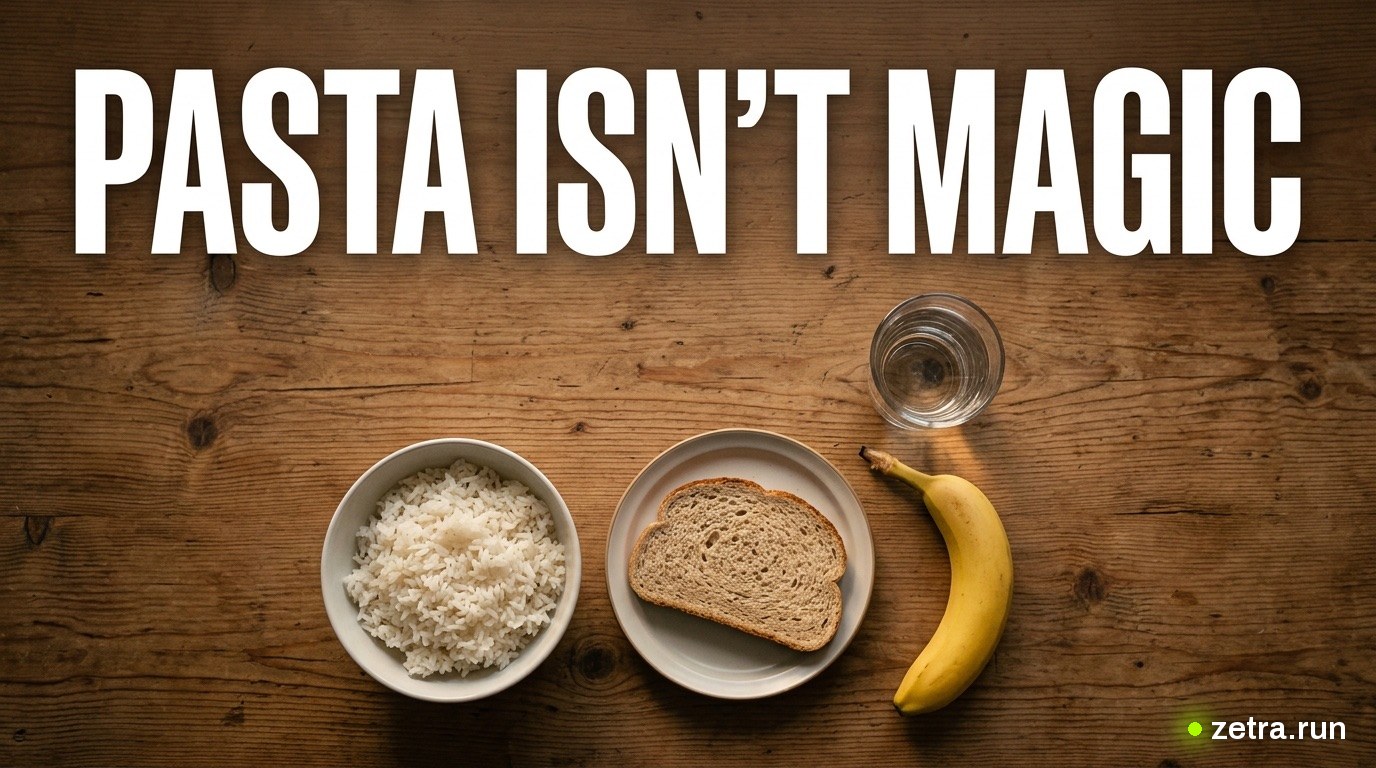
Carb loading is not an excuse to panic-eat pasta the night before your marathon.
Carb loading before a marathon means eating more carbohydrate for a couple of days so your muscles start the race with fuller glycogen stores. Glycogen is stored carbohydrate, and it is one of your main fuels when you run hard or long. For a marathon, it matters. For a half marathon, it can help some runners. For shorter races, it is rarely the thing that decides your day.
The modern version is simple: shift more of your normal meals toward easy-to-digest carbs, keep training light, avoid gut surprises, and do not turn the final dinner into a food challenge.
What is carb loading actually for?
Carb loading is for topping up muscle glycogen before a long race where fuel stores can become a limiter.
When you run, your body uses a mix of carbohydrate and fat. The harder you run, the more you lean on carbohydrate. The longer you run, the more your stored carbohydrate matters. You also take in fuel during the race, but gels and sports drink do not fully replace what you burn. They help slow the drain.
Think of glycogen like a tank you start with. Carb loading does not make you faster by magic. It helps you avoid starting with a half-empty tank.
That is why carb loading makes the most sense for the marathon. The distance is long enough that even well-trained runners can hit the point where pace suddenly feels impossible. Your legs feel flat. Your brain gets loud. The same effort no longer produces the same speed.
For the half marathon, it depends. If you will be racing for a long time, pushing hard, or you know you fade late, a mild carb focus can help. If you are running a short 5K or 10K, you do not need a special carb-loading phase. You need normal food, good timing, and a stomach that behaves.
Do I need to carb load before every race?
You do not need a full carb load before every race. Match the approach to the distance and your expected time on course.
| Race distance | Does carb loading matter? | Practical approach |
|---|---|---|
| 5K | Usually no | Eat normally the day before. Have a familiar pre-run snack or meal if you need one. |
| 10K | Usually no | Focus on a normal dinner, good breakfast timing, and avoiding gut surprises. |
| Half marathon | Sometimes | Add more carbs for 1–2 days if you will be out there a while, race hard, or tend to fade late. Keep fibre and fat moderate close to race time. |
| Marathon | Yes, for most racers | Spend 2–3 days eating higher-carb meals while training volume drops. Practise this before long runs. |
| Ultra | It depends | Fueling becomes highly individual. Practise early and consider a sports dietitian if you want a detailed plan. |
This is the part many first-time marathoners get wrong: carb loading is not only about the meal before the race. It is about the whole lead-in.
By the time you sit down for dinner the night before, the goal is almost finished. You are not trying to rescue a bad week with one giant bowl of pasta. You are trying to eat something familiar, carb-rich, and calm enough that you sleep.
How many days before a marathon should you carb load?
For most marathoners, the practical window is the final two to three days before race day.
That does not mean you eat nonstop for three days. It means carbs take up more space on your plate while your training gets lighter. The taper helps because you are burning less fuel in workouts. The food helps because you are giving your body more carbohydrate to store.
A simple pattern looks like this:
- Keep your usual meal rhythm.
- Add a carb source to each meal.
- Choose foods you already tolerate.
- Reduce very high-fibre choices as race day gets close if they upset your gut.
- Keep protein in the meal, but do not make it the centrepiece.
- Keep fats moderate, especially at the final dinner.
- Sip fluids normally rather than forcing huge amounts of water.
Your plate might shift from “protein, salad, and a small carb” to “rice, potatoes, pasta, bread, oats, cereal, pancakes, bagels, fruit, or juice with some protein on the side.”
The exact foods matter less than tolerance. Rice can work. Pasta can work. Potatoes can work. Bread can work. If your stomach likes it and you have tested it, it is a candidate.
If you have diabetes, a history of disordered eating, gastrointestinal disease, food allergies, or you want a precise gram-by-gram plan, work with a qualified sports dietitian or medical professional. Racing is already stressful. You do not need to guess your way through a plan that affects your health.
Why does one huge pasta dinner backfire?
One huge pasta dinner can backfire because your gut has limits, especially when nerves are high and race morning is close.
You are not a storage locker. If you suddenly eat far more than normal, your stomach and intestines have to deal with it. That can mean bloating, reflux, heavy legs, poor sleep, or an urgent bathroom stop in the morning.
The pasta is not the problem. The panic is.
A giant restaurant meal can also come with hidden problems: rich sauces, lots of cheese, unfamiliar oils, heavy portions, late timing, salty sides, and dessert you do not normally eat. None of those are evil. They are just risky the night before a race you have trained months to run.
Better: make the final dinner boring on purpose.
Good race-eve meals are usually:
- Familiar
- Carb-forward
- Moderate in fibre
- Moderate in fat
- Not spicy if spice bothers you
- Eaten early enough that you are not lying down full
That could be pasta with a simple sauce and some lean protein. It could be rice with eggs or chicken. It could be a baked potato, bread, soup, and a small dessert. It could be noodles, pancakes, or a bagel-based meal.
The best choice is not the meal that sounds most “runner.” It is the meal that lets you wake up feeling normal.
If you are still sorting out basic pre-run food timing, read what to eat before running. Race week is the wrong time to discover that your favourite “healthy” breakfast sends you looking for a bathroom at mile three.
What should you eat while carb loading?
You should eat normal foods that give you more carbohydrate without shocking your gut.
Carbs are not only pasta. They include rice, oats, bread, potatoes, sweet potatoes, cereal, tortillas, pancakes, noodles, fruit, dried fruit, juice, sports drink, pretzels, crackers, and lower-fibre snack foods if your stomach does better with them close to race day.
That last part matters. During normal training, high-fibre foods can be great. Beans, lentils, big salads, whole grains, and lots of vegetables belong in many runners’ diets. But in the final day or two before a marathon, some runners feel better if they ease back on the bulkiest foods.
You are not trying to become a different person. You are trying to reduce bathroom risk.
A simple race-week carb-loading day might look like:
- Breakfast: oats with banana and honey, or toast with eggs and fruit
- Lunch: rice bowl, sandwich, noodles, or potatoes with a familiar protein
- Snack: bagel, cereal, pretzels, fruit, yogurt if you tolerate it
- Dinner: pasta, rice, potatoes, or bread with a simple sauce and moderate protein
- Drinks: water as normal, plus an electrolyte drink or sports drink if you use one well
You do not need to force-feed. You also do not need to fear hunger. If you are more hungry during the taper, that can happen. If you are less hungry because nerves are up, choose denser carbs and smaller portions more often.
Use common sense. A carb load that leaves you nauseous is not a good carb load.
How do hydration and salt fit into carb loading?
Hydration supports carb loading, but chugging water does not make the plan better.
When your body stores carbohydrate, it also stores water with it. This is normal. It is one reason you might feel a little heavier or softer in the final days. That is not fat gain from two bowls of rice. It is stored fuel and fluid.
Do not panic.
You want to start the race hydrated, not waterlogged. Pale-yellow urine is a rough sign for many people, but it is not a perfect dashboard. Supplements, vitamins, coffee, heat, and nerves can all change what you see. Thirst still matters.
Salt also matters because long races involve sweat. But again, do not make a dramatic change at the last second. If you normally use electrolytes in long runs, keep using what worked. If you have never used a high-sodium drink, do not make race morning the experiment.
The same rule applies to caffeine, gels, chews, sports drink, and breakfast.
Practise first.
How do you practise carb loading in training?
You practise carb loading before a long run or tune-up race so race week feels boring.
Pick one or two key long runs in your build. In the day or two before, eat a higher-carb version of your normal diet. Then run with the breakfast and mid-run fuel you plan to use on race day.
After the run, write down what happened:
- Did your stomach feel calm?
- Did you need the bathroom more than usual?
- Did you feel heavy or normal?
- Did you fade late?
- Did breakfast sit well?
- Did your gels or drink work at race effort?
- Did you sleep well after the bigger carb day?
This is not about chasing perfection. It is about removing unknowns.
For a first marathon, your long-run fuel practice matters as much as the carb load itself. Starting with full glycogen helps. Taking in carbs during the race helps. Pacing correctly helps even more. If you go out too fast, no pasta dinner can protect you from the cost.
If this is your first attempt at the distance, pair this with a realistic race plan from first marathon. Fueling is one piece. The other pieces are pacing, patience, and not racing the first 10K like it is a separate event.
What are the biggest carb-loading mistakes?
The biggest mistake is changing too much too late.
You want race week to feel controlled. Not perfect. Controlled.
Common mistakes:
Eating one huge meal instead of spreading carbs out
Your muscles do not need a dramatic final supper. They need a steady supply across the final days. Spread the carbs across breakfast, lunch, dinner, and snacks.
Choosing “healthy” foods your gut cannot handle
A giant salad, bean chilli, bran cereal, and roasted vegetables may be nutritious. They may also be a poor match for the night before a marathon. Healthy does not always mean race-friendly.
Cutting carbs because you are tapering
Some runners get nervous when training drops. They eat less because they think they are “not earning” the food. That can leave you under-fuelled. The taper is exactly when your body has a chance to store more.
Overhydrating
More water is not always better. Drink steadily. Include sodium if that is already part of your plan. Avoid turning hydration into another source of panic.
Copying another runner’s exact plan
Your friend’s perfect breakfast may wreck your gut. Your clubmate’s salt routine may be wrong for your sweat rate, pace, and weather. Use other runners for ideas, not orders.
Treating carb loading as permission to eat anything
You can enjoy the pre-race meal. You do not need to be joyless. But deep-fried food, heavy cream sauces, huge desserts, and unfamiliar restaurant meals add risk. Save the victory meal for after the finish.
Frequently asked questions
Do I need to carb load for a half marathon?
You may not need a full carb load for a half marathon, but a mild carb focus can help if you will be racing for a long time, pushing hard, or you tend to fade late. For many runners, eating enough carbs the day before, choosing a familiar breakfast, and taking fuel during the race if needed is enough.
How many days before should I carb load?
For a marathon, most runners use the final two to three days before race day to eat more carbohydrate while training volume is low. For a half marathon, one to two days of slightly higher-carb eating is often enough if you choose to do it. Keep the foods familiar and avoid making the final dinner unusually large.
What should I eat the night before a race?
Eat a familiar, carb-rich meal that sits well in your stomach. Pasta with simple sauce can work, but so can rice, potatoes, noodles, bread, or pancakes. Keep fibre, fat, and spice moderate if those tend to bother you. The goal is to wake up comfortable, not stuffed.
Does carb loading make you gain weight?
You may see the scale rise slightly during carb loading because stored carbohydrate holds water. That does not mean you gained meaningful fat in a couple of days. For race purposes, that extra stored fuel and fluid can be useful. If scale changes are stressful for you, do not weigh yourself during race week.
Is pasta the best carb-loading food?
Pasta is one good carb-loading food, not the best one for everyone. Rice, potatoes, bread, oats, cereal, pancakes, tortillas, noodles, fruit, juice, and sports drink can all help. The best choice is the carb source you tolerate well and have practised before race day.
Carb loading works best when it is quiet: a few higher-carb days, familiar meals, sensible fluids, and no last-minute drama. Use your long runs to test the plan, then repeat what worked. Zetra can help you keep the rest of race prep honest with live coaching that reacts to your heart rate, pace, and cadence during the run.
Run with a coach in your ear.
Zetra guides you live — heart rate, pace and cadence — on every run.