What to Eat Before a Run When Time Is Really Tight
By the Zetra Coaching Team
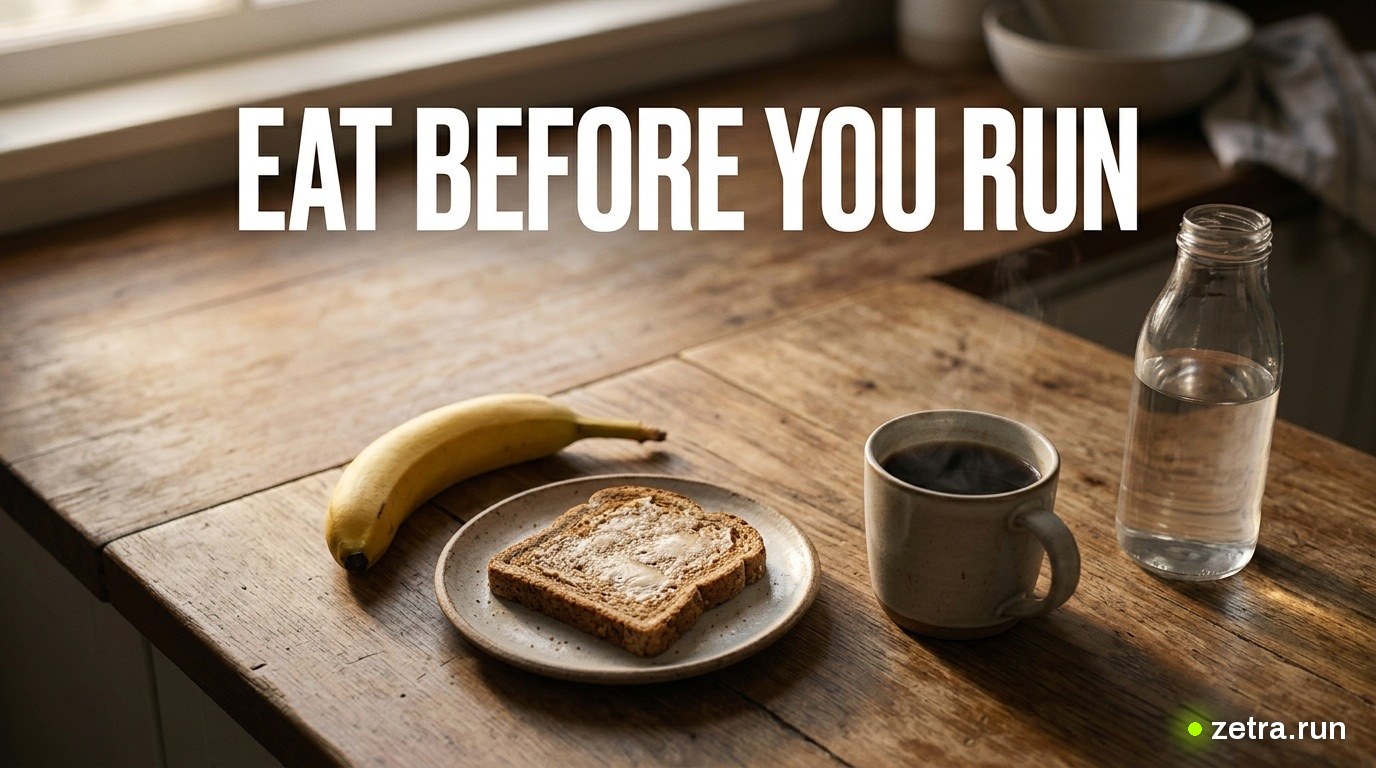
You lace up hungry, check the clock, and realize breakfast might help or wreck the whole run.
If time is tight, choose your pre-run food by two things: how long until you run, and how hard or long the run will be. With about 3 hours, eat a normal carb-focused meal. With about 1 hour, eat a small, familiar snack. With 15–30 minutes, keep it tiny: quick carbs, low fat, low fiber, low volume. For a short easy run, running on an empty stomach is fine for many people. For hard workouts, long runs, and races, practice fueling instead of guessing.
Your stomach is not being dramatic. Running shakes your gut, pulls blood toward working muscles, and turns “healthy” foods like nuts, bran cereal, and big salads into bad timing. The goal is not the perfect breakfast. The goal is the right amount of easy fuel for the run you are actually about to do.
Should you eat before a run or go empty?
You should eat before a run when the run is long, hard, or race-specific; you can often skip food before a short easy run if you feel good doing it.
That is the simplest rule.
A 25-minute easy jog at conversational effort is different from hill repeats, a tempo run, or a long run. Your body has stored carbohydrate in your muscles and liver. For easy running, many runners can use that stored fuel without needing breakfast first, especially early in the morning.
But “can” is not “should for everyone.”
If you wake up shaky, lightheaded, unusually irritable, or you fade badly after 10 minutes, you probably need something small. If you are pregnant, have diabetes, take medication affected by food, have a history of disordered eating, or have any medical condition tied to blood sugar or digestion, get advice from a qualified professional instead of copying a generic running plan.
For most runners, the decision is practical:
- Short and easy: empty stomach may be fine.
- Short but hard: take in quick carbs if you can.
- Longer than your normal daily run: eat beforehand, and plan fuel during the run if needed.
- Race day: do what you practiced. No experiments.
Think of pre-run food as a dial, not a switch. You are not choosing between a full breakfast and nothing. A banana, a slice of toast, a few crackers, or a small sports drink can be enough.
What should you eat 3 hours, 1 hour, or 15 minutes before running?
The less time you have, the smaller and simpler the food should be.
Your gut needs time to empty. A normal breakfast can work well three hours before a run. The same breakfast 20 minutes before the door can feel like a brick. That is not a character flaw. It is timing.
Use this as your starting point, then adjust based on what your body accepts.
| Time before run | What works | What to avoid |
|---|---|---|
| 3 hours | A normal meal built around easy carbs: oatmeal with banana, toast with eggs, rice with a little lean protein, bagel with jam, pancakes, cereal with milk if you tolerate it | Very greasy meals, huge portions, high-fiber experiments, unfamiliar foods |
| 1 hour | A small snack: banana, toast with honey or jam, applesauce pouch, low-fiber cereal, plain bagel half, rice cake, small granola bar you know sits well | Nut butter-heavy snacks, big smoothies, bran cereal, large coffee, fried food |
| 30 minutes | Quick carbs in a small amount: a few crackers, half a banana, a small sports drink, chews, dates if you tolerate them | High-fat bars, nuts, seeds, dairy if it bothers you, anything that needs a lot of chewing and digesting |
| 15 minutes | Tiny and simple: a few sips of sports drink, a bite of banana, one chew, small piece of toast, or nothing if it is easy and short | A full snack, high-fiber fruit, protein shakes, cold brew on an empty gut if coffee triggers you |
The pattern matters more than the exact food.
More time means you can handle more volume, more protein, and a little more fat. Less time means you want easy carbohydrate and almost nothing else. Carbohydrate is the main fuel your body reaches for when running gets harder. Fat and protein are useful in your overall diet, but right before a run they can slow digestion and increase the chance of sloshing, cramps, or urgent bathroom stops.
If you only remember one line, make it this:
Close to the run, eat small, plain carbs you already trust.
What should you eat before an early-morning run?
Before an early-morning run, keep the decision boring: eat nothing for a short easy run if you tolerate it, or take a small carb snack if the run is longer, harder, or you wake up hungry.
Morning running adds pressure because the clock is rude. You do not have three calm hours to digest oatmeal and coffee. You have the alarm, the shoes, the bathroom, and maybe 35 minutes before life starts.
So build a default menu.
For a short easy morning run, try one of these:
- Water only.
- A few sips of sports drink.
- Half a banana.
- One slice of toast with jam.
- A small applesauce pouch.
For a harder morning workout, try to give yourself at least 20–30 minutes and take in quick carbs. You do not need a feast. You need enough fuel that the session does not feel flat from the first interval.
Good options:
- Banana plus water.
- Toast with honey.
- Half a bagel with jam.
- Low-fiber cereal with a small amount of milk, if dairy sits well.
- Sports drink if solid food feels risky.
Coffee is personal. Some runners love it before a run. Some runners love it and then regret it at mile two. Caffeine can stimulate the gut, especially on an empty stomach. If coffee sends you to the bathroom, use it earlier, use less, or save it for after.
Hydration is the same: do not chug a huge bottle at the door. A few mouthfuls may be enough for a short run. Too much liquid right before running can bounce around and make you feel worse.
Why does food cause stomach problems while running?
Food causes stomach problems while running because digestion slows while your muscles demand blood and your body is bouncing with every stride.
When you run, your body prioritizes movement. Blood flow shifts toward the working muscles and skin. Your gut still has a job, but it is no longer first in line. Add impact, nerves, caffeine, heat, and a big breakfast, and your stomach can protest.
The usual suspects are simple:
Fat slows digestion. Nut butter, bacon, buttery pastries, fried food, and heavy cream can sit around longer than you want.
Fiber adds bulk. Beans, bran, large salads, high-fiber bars, berries, and some whole grains are healthy foods. They are just risky right before running.
Large volume stretches the stomach. A giant smoothie can look light because it is drinkable. Your gut still has to handle all of it.
Dairy is individual. Some runners tolerate yogurt or milk well. Others get cramps or urgency. There is no moral lesson here. Your gut gets a vote.
Stress changes digestion. Race morning, new routes, group runs, and time pressure can all make your gut more reactive. This is one reason you practice your breakfast before race day.
If you have sharp pain, blood in stool, repeated vomiting, unexplained weight loss, symptoms that persist outside running, or ongoing GI problems that do not improve with simple changes, see a medical professional. Running advice is not a diagnosis.
What should you avoid eating before a run?
Before a run, avoid foods that are large, greasy, very high in fiber, or unfamiliar, especially when you have less than an hour.
This is where “healthy” can mislead you. A bowl of lentils, a big salad, a high-fiber cereal, or a seed-packed protein bar may be great at lunch. Before a run, it can be too much work for your gut.
Be careful with:
- Fried foods.
- Large servings of nuts or nut butter.
- High-fiber cereal or bran muffins.
- Beans and lentils.
- Big salads or raw vegetables.
- Creamy sauces.
- Very spicy food.
- New gels, chews, bars, or drink mixes.
- Large smoothies with fat, fiber, and protein all packed together.
- Alcohol the night before, especially before long or hard runs.
You do not need to ban these foods from your life. Just move them away from the run.
A simple timing rule helps: the closer you are to running, the more your food should look like plain carbs. Toast. Banana. Rice. Bagel. Applesauce. Sports drink. Not exciting. That is the point.
How do you test what works without ruining a run?
You test pre-run food on easy training days first, then repeat what works before harder sessions.
Do not test a new breakfast before a race, a key workout, or the first big first 5K race day you have been building toward. Your gut needs practice too.
Use a simple food log for two weeks. Nothing fancy.
Write down:
- What you ate.
- How long before the run you ate it.
- How much you drank.
- Run type and effort.
- Gut result: fine, heavy, crampy, urgent, nauseous, bloated.
- Energy result: steady, hungry, flat, strong.
Patterns show up fast. Maybe banana works but oats need more time. Maybe coffee is fine before easy runs but risky before speed. Maybe you can run empty for 30 minutes but need toast before anything longer.
Change one thing at a time. If you try a new bar, more coffee, less water, and a faster route on the same morning, you will not know what caused the problem.
Race practice matters because race nerves change the system. Your normal stomach can become less normal when you pin on a bib. In the final weeks before a race, rehearse the whole setup: wake time, bathroom time, breakfast, fluids, and warm-up. Make it boring before it matters.
How much should you eat before different run lengths?
Eat less before short easy runs, more before long or hard runs, and practice the exact amount your gut accepts.
Here is a plain way to think about it.
For 20–40 minutes easy, you may need nothing. If you dislike running hungry, take a small bite of quick carbs.
For 45–75 minutes easy, many runners feel better with a small snack, especially in the morning. Toast, banana, applesauce, or half a bagel can be enough.
For hard workouts, treat fuel as part of the session. Intervals, hills, tempo work, and race-pace running ask more from your carbohydrate stores. If you start underfed, the workout can feel harder than it should, and your pacing can fall apart.
For long runs, pre-run food matters more. You are not just getting out the door. You are setting up the first part of the run so you do not spend the second part negotiating with your stomach or your energy levels. If the run is long enough that you plan fuel during it, the breakfast before it should be practiced too.
For races, copy training. The best race breakfast is not the one that sounds most athletic. It is the one you have used enough times that you trust it.
Frequently asked questions
Should I eat before a morning run?
You should eat before a morning run if the run is hard, long, or you wake up feeling low on energy. For a short easy run, many runners do fine with water only or a few sips of sports drink. If running empty makes you shaky, lightheaded, or miserable, take a small carb snack before you go.
What should I eat 30 minutes before running?
Eat a small amount of quick, familiar carbohydrate 30 minutes before running. Good options include half a banana, toast with jam, a few crackers, applesauce, a small sports drink, or one or two chews. Avoid high-fat, high-fiber, or large snacks this close to the run.
Is it bad to run on an empty stomach?
Running on an empty stomach is not automatically bad. Many runners tolerate fasted short easy runs well. It is a poor fit for some people, and it is usually not the best choice for hard sessions, long runs, or races. If you feel dizzy, weak, unusually tired, or obsessed with food afterward, adjust.
What causes stomach problems while running?
Stomach problems while running often come from a mix of timing, food choice, effort, impact, heat, nerves, and caffeine. Fat, fiber, large portions, and unfamiliar foods are common triggers because they take longer to digest or add bulk. Persistent or severe symptoms should be checked by a medical professional.
What should I eat before a race?
Eat the same breakfast you practiced in training. Choose familiar, carb-focused foods that sit well, and give yourself enough time to digest. A bagel with jam, oatmeal with banana, toast with honey, rice, or low-fiber cereal can all work. The best race breakfast is the one that gives you steady energy and no surprises.
Pre-run food gets easier when you stop chasing the perfect answer and start matching the snack to the clock. Eat more when you have time. Eat simpler when you do not. Practice before the day you care about. Zetra helps by coaching the run live from your heart rate, pace, and cadence, so you can connect what you ate with how the run actually feels.
Run with a coach in your ear.
Zetra guides you live — heart rate, pace and cadence — on every run.