Running Cadence: The Form Lever You Can Actually Change
By the Zetra Coaching Team
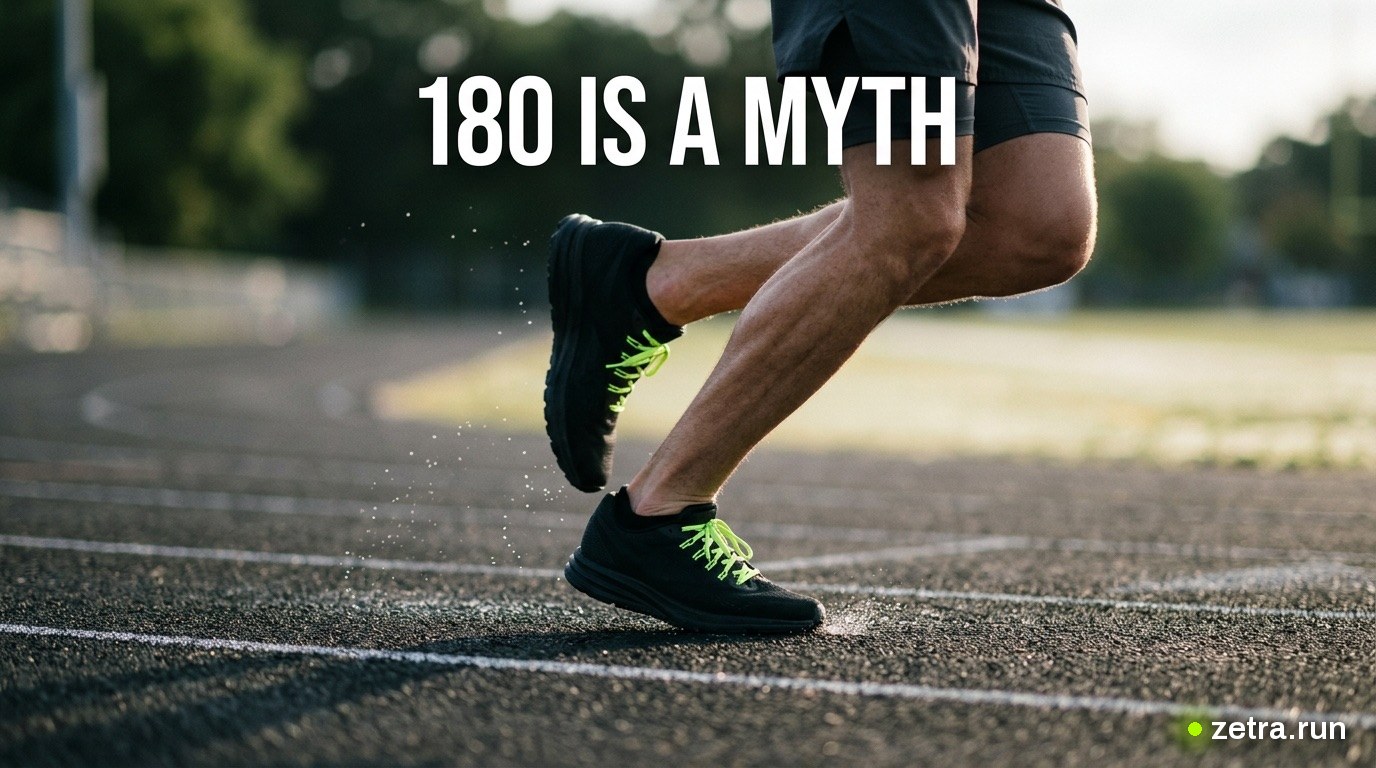
Watch a group of experienced runners glide past and something about them looks different from the rest of us — lighter, quicker, quieter. A big part of what you're seeing is cadence.
Cadence is your step rate: how many steps you take per minute while running, counting both feet. It matters because it quietly shapes almost everything else in your stride — where your foot lands, how hard each impact hits, how much energy you waste bouncing. If your cadence is low, you're probably overstriding, and raising your step rate by a modest amount is one of the few form changes with a genuinely good track record. This article covers what the numbers mean, what the famous "180" rule gets right and wrong, and how to raise your cadence without ruining your runs.
What cadence does to your stride
Think about what a low step rate forces. If you're covering ground with few steps, each step must be long. Reaching for that long stride usually means your foot lands well ahead of your body, heel first, knee straight — a position where every footstrike acts as a small brake. You decelerate, then spend energy re-accelerating, dozens of times a minute. The impact of each landing is bigger too, and it arrives up the leg with the knee poorly positioned to absorb it.
Now shorten the stride and quicken the rhythm, same speed. Your foot lands closer to beneath your hips, your knee is slightly bent on contact, the braking force shrinks, and each individual impact gets smaller because it's split across more steps. You also bounce less vertically — energy that was going up and down starts going forward.
None of this makes higher cadence a cure-all, and the research record is more modest than influencers suggest. But among the things you can consciously change about your form, step rate is unusual: it's easy to measure, easy to nudge, and the mechanics of why it helps are straightforward.
The signs your cadence is too low
- You can hear your own footsteps slapping, even on easy runs
- Visible heel-first landings far in front of your body in any photo of you running
- A bouncy, vertical gait — your head noticeably rises and falls
- Recurring shin or knee niggles that flare with longer runs
- A cadence reading in the low 150s or below at your normal easy pace
The truth about 180
Somewhere along the way, "run at 180 steps per minute" hardened into law. The number traces back to coach Jack Daniels counting steps at the 1984 Olympics and noticing elite distance runners mostly turned over at about 180 or above. It was an observation about elites racing, not a prescription for everyone jogging — and even Daniels framed it more carefully than the internet does.
Here's the honest version. There is no single correct cadence. Yours depends on your height, leg length, speed, and history — and cadence naturally rises as you run faster, so comparing your easy-run number to a racing elite's is meaningless. Plenty of good runners cruise easy miles in the 160s. What the folklore gets right is the direction: very low cadence at normal running speeds usually travels with overstriding, and most runners who land there benefit from nudging the number up. Treat 180 as a landmark on the map, not the destination.
A more useful rule: if your easy-pace cadence sits below roughly 160, there's likely something to gain. If you're already in the 170s, the returns shrink fast, and chasing a number for its own sake just makes running feel like typing practice.
How to measure and improve it
First, get your real number. Any modern running watch reports cadence; without one, count your right-foot strikes for 30 seconds on flat ground at easy pace and multiply by four. Measure on a few runs — it varies with terrain and fatigue.
Then, if it's low, raise it gently:
- Target no more than about a 5% increase at a time. From 155, aim near 162 — not 180. Big jumps feel terrible and don't stick.
- Think "shorter, quicker, quieter" — not "faster". The pace stays the same; only the rhythm changes. If you speed up, you've changed the wrong variable.
- Use short doses. A few one-minute blocks at the new rhythm inside an easy run, then let your legs do what they want. Extend the blocks over weeks.
- Borrow a beat. A metronome app, or music near your target BPM, does more than willpower will. Match your steps to it and stop thinking.
- Expect it to feel choppy for a couple of weeks. New rhythms always do. It fades as the pattern becomes automatic — typically within a month of regular exposure.
Once the new rate feels natural, you can decide whether another small nudge is worth it. Often it isn't, and that's a fine place to stop.
What not to do
Don't chase cadence while also changing your footstrike, your shoes, and your weekly mileage. Stacked changes make every niggle unreadable. And don't force race-day experiments: rhythm changes belong in easy runs first, where the cost of feeling awkward is zero.
Frequently asked questions
What's a good running cadence for a beginner?
There's no universal number, but at easy pace most adults land somewhere between 155 and 175. Below roughly 160, a gentle increase is usually worth trying; if you're already in the 170s, your rhythm is unlikely to be what's holding you back.
Do I have to reach 180 steps per minute?
No. The 180 figure came from observing elites racing, and it was never meant as a universal target. Direction matters more than destination: if your cadence is very low, nudge it up in small steps and stop where running feels smoother and quieter.
Does height change what cadence I should run?
Yes — taller runners with longer legs naturally turn over somewhat slower at the same pace, which is one more reason a single magic number makes no sense. Compare you to you: measure your baseline, improve it modestly, judge by feel and quiet landings.
How fast can I increase my cadence?
Add about 5% and live there until it feels automatic — usually a few weeks — before considering another step. Faster than that and your form falls apart, your calves complain, and the change rarely survives.
Will a higher cadence fix my knee pain?
It can reduce the braking and impact patterns associated with knee stress, and it's a sensible experiment for many runners. It's not a diagnosis or a cure — pain that persists deserves a professional's eyes, not another form tweak.
The catch with cadence is that it drifts exactly when you stop paying attention — late in runs, up hills, when you're tired. That's the gap between knowing your number and running it. Zetra tracks your cadence live and gives you a quiet cue the moment your rhythm slips, so the fix happens mid-stride, not in the post-run review.
Run with a coach in your ear.
Zetra guides you live — heart rate, pace and cadence — on every run.